
















Browse

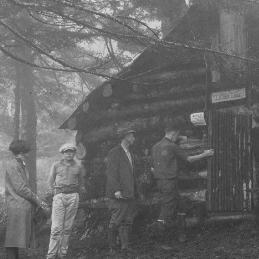
"Mystery Building in the Sugarlands." Great Smoky Mountains Colloquy 8, no. 2 (2007): 4.
"New Algal Species Records for the Great Smoky Mountains National Park with an Annotated Checklist of All Reported Algal Taxa for the Park." Southeastern Naturalist 6, no. sp 2 (2007): 99-134.
"A New Species of Conidiobolus from Great Smoky Mountains National Park." Mycotaxon 100 (2007): 227-233.
"A New Species of Ptomaphagus (Appadelopsis) (Coleoptera : Leiodidae) from Great Smoky Mountains National Park, U.S.A." Zootaxa, no. 1478 (2007): 61-64.
"A New Species of the Genus Philothermus Aube (Coleoptera : Cerylonidae) from Great Smoky Mountains National Park, USA." Zootaxa, no. 1390 (2007): 17-20.
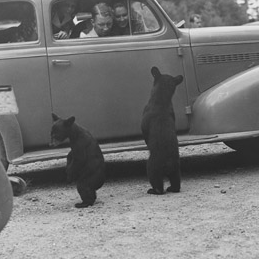
Night of the Black Bear: A Mystery in Great Smoky Mountains National Park. National Geographic Society, 2007.
"Notes on the Lichen Genus Lepraria in Great Smoky Mountains National Park, Southeastern North America: Lepraria lanata and L. salazinica spp. nov." Opuscula Philolichenum 4 (2007): 51-54.
Notice of Availability of Final Environmental Impact Statement for hte North Shore Road in Great Smoky Mountains National Park. Vol. 72. U.S. Department of the Interior, 2007.
"Out on a Horse." Smoky Mountain Living 7, no. 4 (2007): 21-23.
"Patterns in Lightning-caused Fires at Great Smoky Mountains National Park." Fire Ecology 3, no. 2 (2007): 68-82.
Phase I Archaeological Investigations by the Great Smoky Mountains Archaeological Field Program 2007, Cades Cove, Blount County, Tennessee. Knoxville, Tenn.: The University of Tennessee, 2007.
Physiological Stress in Native Brook Trout (Salvelinus Fontinalis) During Episodic Acidification of Streams in the Great Smoky Mountains National Park. Knoxville, TN: University of Tennessee, 2007.
The Place Setting: Timeless Tastes of the Mountain South, from Bright Hope to Frog Level: Second Serving. Mercer University Press, 2007.
"Pubertal Maturation and the Development of Alcohol Use and Abuse." Drug and Alcohol Dependence 88S (2007): S50-S59.
"Pyrenomycetes of the Great Smoky Mountains National Park. IV. Biscogniauxia, Camaropella, Camarops, Camillea, Peridoxylon and Whalleya." Fungal Diversity 25 (2007): 219-231.
"Pyrenomycetes of the Great Smoky Mountains National Park. v. Annulohypoxylon and Hypoxylon (Xylariaceae)." Fungal Diversity 27, no. 1 (2007): 231-245.
"Qualla Arts & Crafts Mutual: Crafter's Haven, Collector's Dream." Smoky Mountain Living 7, no. 3 (2007): 78-80.
Raintree: Sanctuary. Silhouette, 2007.
"Rarity and Diversity in Forest Ant Assemblages of Great Smoky Mountains National Park." Southeastern Naturalist 6, no. sp2 (2007): 215-228.
The Ravensford Tract Archeological Project. National Park Service: Southeast Archeological Center, 2007.
Rebel on the Road: And Why I Was Never Neutral. Truman State University Press, 2007.
"Relationship Between Cornus florida L. and Calcium Mineralization in Two Southern Appalachian Forest Types." Forest Ecology and Management 245, no. 1–3 (2007): 110-117.
"Relative Role of Understory and Overstory in Carbon and Nitrogen Cycling in a Southern Appalachian Spruce-Fir Forest." Canadian Journal of Forest Research 37, no. 12 (2007): 2689-2700.
Report on Archeological Investigations for the Establishment of Sewage Line to Connect Smokemont Riding Stables Horse Trailer, Bldg. #378 to Main Sewage Trunk Line Bridge and Establishment of Underground Propane Tank to Service the Balsam Mountain Quarter. Gatlinburg, TN: Great Smoky Mountains National Park, 2007.
Report on Archeological Investigations for the Metcalf Bottoms Comfort Station Septic Tank and Fill Line Installation, Great Smoky Mountains National Park, Sevier County, Tn. Gatlinburg, TN: Great Smoky Mountains National Park, 2007.

